
Creative pedagogies for teaching adult EAL learners
Creative pedagogies for teaching adult EAL learners

Home » Creative pedagogies for teaching adult EAL learners
Whole-day Adult TESOL event: Creative pedagogies for teaching adult EAL learners *SOLD OUT*
This full-day forum will bring together researchers and practitioners in the adult EAL sector to explore current evidence-based teaching strategies. Sessions will include workshops on practical teaching tips, research presentations, a panel discussion and plenty of opportunities for networking.
Carringbush Adult Education – 415 Church St, Richmond, VIC, 3121
8:30 am – 4:00 pm, Friday 20th March 2020
| Time | Presentation |
|---|---|
| 8.30 – 9.00 am | Registration |
| 9 am | Introduction: Marg Corrigan, Carringbush Adult Education Keynote presentation: Pedagogical work with low literacy adults [Dr Yvette Slaughter, The University of Melbourne] |
| 9.50 am | Session A: 1. Teaching pronunciation: it’s never too early [Jacky Springall] OR 2. Let’s Get Writing: collaborative approaches to developing learners’ writing skills [Laura Chapman] |
| 10.30 – 11.00 am | Morning tea |
| 11.00 – 11.40 am | Session B: 1. Intercultural communication in the adult EAL classroom: Concepts and classroom practice [Skye Playsted] OR 2. Blended Learning in the SEE program [Luke Treadwell] |
| 11.45 am – 12.25 pm | Session C: 1. A song a day in my EAL classroom [Carmel Davies & Sharon Duff] OR 2. Spelling strategies that can work! [Jenny Robins] |
| 12.25 – 1.05 pm | Lunch |
| 1.10-1.55 pm | Panel discussion: Bridging the gap between research and practice Facilitator: Marg Corrigan Panel: Dr Katrina Tour, Dr Shem Macdonald, Dr Seham Shwayli & Skye Playsted |
| 2.00 – 3.00 pm | Teaching tips in two rounds: great activities to use tomorrow! |
| 3.30 pm | Conclusion & raffle |
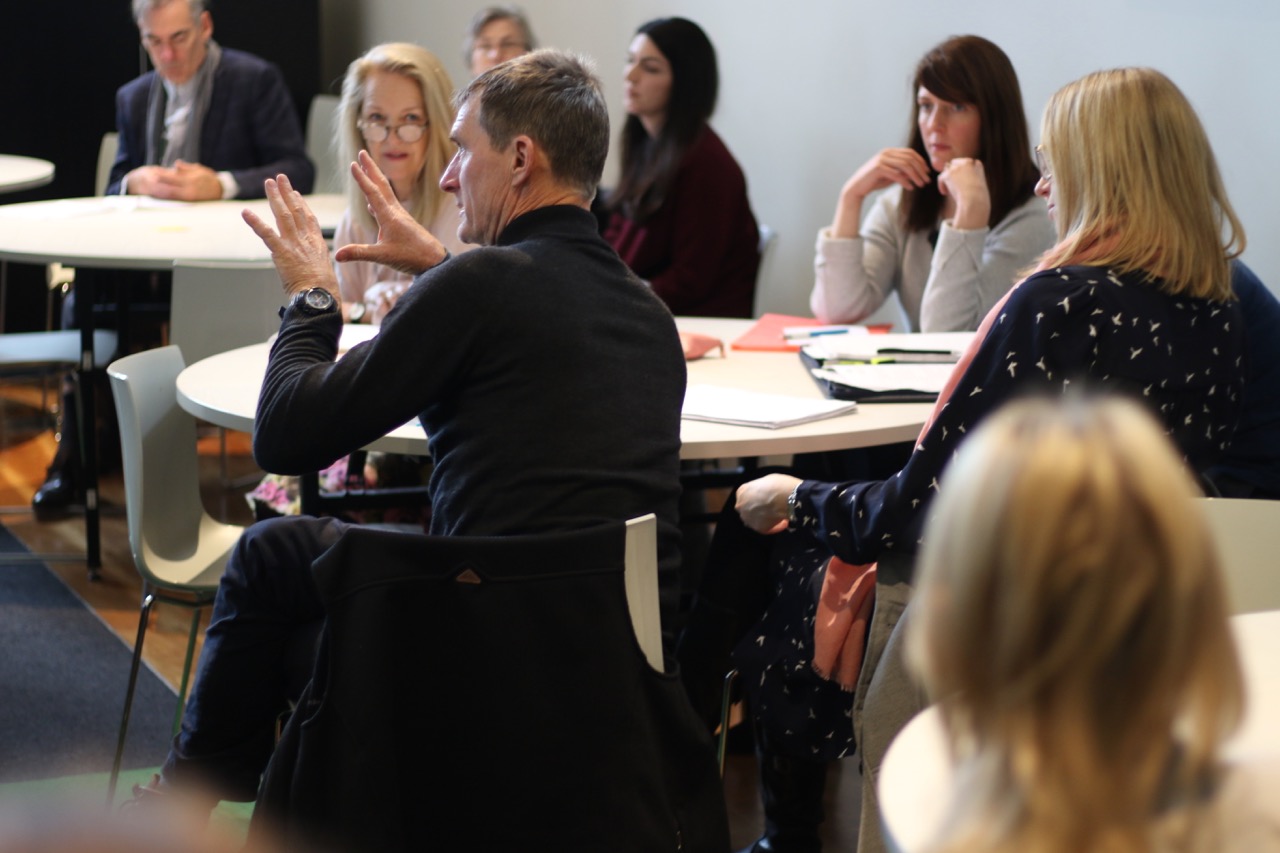
Keynote Presentation: Pedagogical work with low literacy adults
Dr Yvette Slaughter, The University of Melbourne
The Teaching of English as a Second or Other Language (TESOL) presents immense challenges due to the enormous diversity of the field. This is particularly true for teachers who work with adults TESOL learners with low levels of literacy, often in both their first language and English, due to the breadth of issues, both language and non-language related that need to be addressed.
This is compounded by the fact that as a focus of research and professional learning, the pedagogy of working with low-literacy learners is less developed than for other areas of TESOL education. A small but growing range of research is exploring the needs of these learners and will be the first focus of this presentation.
The second part reports on a collaborative investigation between two university-based teacher educators and three teachers of English as an additional language working in an adult education centre. Attention will be given to innovations each teacher developed over the course of the research project including instructional changes, greater integration of multimodal and multilingual practices, and changes to scaffolding.
Dr Yvette Slaughter, The University of Melbourne
Dr Yvette Slaughter is Senior lecturer in Language and Literacy Education within the Melbourne Graduate School of Education. Her research interests focus on plurilingual pedagogies, multilingualism in education, language policy and planning, and language program implementation. Yvette is currently working on research focusing on the use of plurilingual pedagogies and engagement with linguistic repertoires in early childhood, primary/secondary and adult educational contexts.
* This event has now sold out. Please email victesol [at] victesol.vic.edu.au if you would like to be placed on the waiting list. You will be notified if there is a cancellation.
Cost: VicTESOL Members $80 – Non-members $120
CLICK HERE TO BECOME A MEMBER OF VICTESOL FOR 2020
Session A
Jacky Springall: Teaching pronunciation: it’s never too early
Jacky Springall has spent most of EAL career working with new migrants and refugees in the Adult Mirant English Program. This has included classroom teaching, curriculum and professional development roles and coordination of delivery programs.
One of her enduring interests has been the integration of pronunciation teaching in everyday EAL programs and its significance for the acquisition of oral language skills. Jacky was involved in several collaborations on teaching pronunciation with Dr. Lynda Yates in the golden days of the AMEP Research Centre resulting in Teaching Pronunciation fact sheets and a professional development kit for assessing intelligibility.
Jacky is currently working for Box Hill Institute coordinating the AMEP and SEE programs at Lilydale and Ringwood.
Workshop:
This hands-on workshop is based on the premise that EAL teachers need to be pro-active in integrating a focus on pronunciation at all levels of teaching with the main goal of instruction being achieving intelligibility. The session will give a brief overview of the different components of pronunciation that students need to master to both make sense of what they hear and to be understood when they speak, and then provide some ideas for activities which relate to larger units of speech (suprasegmental elements) primarily stress, rhythm and intonation. Most of these activities can be adapted to any level or context.
OR
Laura Chapman: Let’s Get Writing: collaborative approaches to developing learners’ writing skills
Laura Chapman is Manager of the Carringbush Volunteer Program and Adult Literacy Program. Laura has worked in adult migrant education programs as a teacher, volunteer trainer, resource writer, project manager and program coordinator.
Laura is particularly interested in content-based learning, family literacy, and cross-sector partnerships that incorporate community development approaches into education.
Presentation description:
This session will demonstrate practical, fun and collaborative activities for learners with diverse skill levels. The aim is to get learners writing without it being arduous, to encourage collaboration in the writing process and to help learners identify how to improve their writing. We will also look at samples of learners’ writing and workshop strategies for individual learners and class groups.
Session B
Skye Playsted: Intercultural communication in the adult EAL classroom: Concepts and classroom practice
Skye Playsted is an educator with over 20 years of teaching experience as a second language and music teacher in Australian schools. She has taught English to adult students as a volunteer in community refugee support groups, and has been teaching in vocational colleges and university academic English programs in the Refugee Welcome Zone of Toowoomba, Queensland.
Skye completed her M Ed (TESOL) via distance through the University of Wollongong, NSW, and has recently moved to Brisbane with her family. She has been awarded a PhD scholarship through the Australian government research training program, to research reflective practice, teacher cognition and oral communication pedagogy in beginner adult English language teaching.
Session abstract:
When we think of the term ‘culture’, it can be easy to focus on concrete elements such as art, music, clothing or food. However, these visible aspects are only the tip of the cultural iceberg. Deeper cultural assumptions are hidden from view and are not as easy to identify. This session offers teachers an opportunity to consider and unpack some commonly held myths about culture which affect learning and teaching in the adult EAL classroom.
OR
Luke Treadwell: Blended Learning in the SEE program
Luke Treadwell is a senior teacher with many years of program and project management in AMES. Luke has taught CALD students for many years across many programs and has worked extensively with the Web Based Training blended learning program.
Workshop:
Digital literacy is recognised as one of the underpinning skills required for education and employment in the modern world. AMES Australia has implemented blended learning in the SEE program as the preferred model where face-to-face classroom delivery, digital literacy and independent learning are integrated.
This session offers a chance for participants to share experiences of, and questions about, blended learning, using a Learner Management System, and strategies for developing digital literacy. The session also presents an overview of student and teacher experience of web based training at AMES.
Session C
Sharon Duff & Carmel Davies: Urban Lyrebirds — A song a day in my EAL classroom
Carmel Davies has over 20 years’ experience teaching English language skills in Australia and internationally. She has worked in refugee camps in Thailand and has directed and co-written student performances. Her ESL resources include ‘What’s the law? Australian law for new arrivals’, ‘Pictures to Words’ Book 1 and the Sing with me! English grammar, conversation and song series.
Sharon Duff has more than 20 years’ experience teaching all EAL levels, delivering workshops, and developing resources for new migrants, including writing materials for the AMEP Distance Learning course ‘Your Call’. She co-founded Urban Lyrebirds, and co-wrote the Highly Commended Sing with me! English grammar, conversation and song series.
Abstract:
Embedding music in the EAL curriculum brings many cognitive, academic and social benefits. Music reflects the rhythm and intonation of a language and is interwoven with all cultures.
- improves language retention
- develops fluency and pronunciation
- encourages learners’ self-confidence
- creates a vibrant learning environment
This workshop builds teachers confidence to use singing. It focuses on innovative and interactive ways to teach all language skills through song from beginner to advanced levels and gives teachers strategies to write their own songs related to student needs or classroom topics.
OR
Jenny Robins: Spelling strategies that can work!
Jenny Robins began as a volunteer in 2011, then became a qualified teacher, working with adult migrants, refugees and asylum seekers and helping them improve their English.
In 2017 Jenny decided to improve her skills and enrolled in a Masters of Learning Intervention in the Graduate School of Education at the University of Melbourne. She has found this invaluable as the course’s students are encouraged to tailor the subjects’ assignments to their context and needs and those of their students.
Workshop:
In her Master’s literacy subject students had to design, implement and report on an intervention with their students. Jenny chose to help her students with their spelling, and this presentation describes the intervention she designed and delivered. The intervention’s activities revolved around the multiple ways long vowels can be spelt, but its main focus was on teaching the students spelling strategies which they could apply later.