
VicTESOL Conference 2025 Presenter Information
VicTESOL Conference 2025 Presenter Information

Home » VicTESOL Conference 2025 » VicTESOL Conference 2025 Presenter Information

Event Running Order
| Time | Activity | Session details | ||||
| 8:00am | Registration opens | |||||
| 8:45am – 9:00am | Welcome to Country | |||||
| 9:00am – 9:10am | Introduction | |||||
| 9:10am – 10:00am | Keynote Presentation | Keynote Presentation Prof. Karen E. Johnson Transformative L2 Teacher Education Innovations | ||||
| 10:00am – 10:30am | Break and Book launch | Break & Book Launch Digital Empowerment for Refugee and Migrant Learners Edited by Ekaterina Tou, Edwin Creely, Peter Waterhouse and Michael Henderson | ||||
| Ballroom 1 | Ballroom 2 | Ballroom 3 | Stradbroke | Huntingfield | ||
| 10:30am – 11:25am | Workshop Streams | May Zafra Memory Pegs (1) | Dr Lilly Yazdanpandah Reading Strategies | Sarah Douglas et al Phonics (1) | Carmel Davies et al Indie Writers | Julie Choi et al Picture Books |
| 11:30am – 11:55am | Presentations | Dr Minh Hue Nguyen | April Edwards | Dr Katrina Tour | Prof Ben Rampton | Flash Presentations |
| 12:00pm – 12:25pm | Presentations | Anne Keary et al | Dr Raqib Chowdhury | Dr Shu Ohki et al | Dr Jack Tan | Flash Presentations |
| 12:30pm – 1:30pm | Lunch | |||||
| 1:30pm – 1:55pm | Presentations | Lynette Lingard | Angela Di Sciascio | Marianne Turner | Belinda Kennett | Flash Presentations |
| 2:00pm – 2:25pm | Presentations | Zielinski & Keenan | Dr Mingyan Hu et al | Clare Blackman | Simone Cassidy | Flash Presentations |
| 2:30pm – 3:25pm | Workshops | Eliza Demasi | Sarah Douglas | May Zafra | Andrea Truckenbrodt | |
| 3:30pm – 4:00pm | Break | |||||
| 4:00pm – 4:50pm | Keynote | Ester de Jong Multilingualism within a Monolingual Habitus | ||||
| 4:50pm – 5:00pm | Conference Close | |||||
| 5:00pm – 6:00pm | Reception | |||||
Printable Program
Key Note Speakers (9:10am - 10:00am and 4:400pm- 4:50pm)
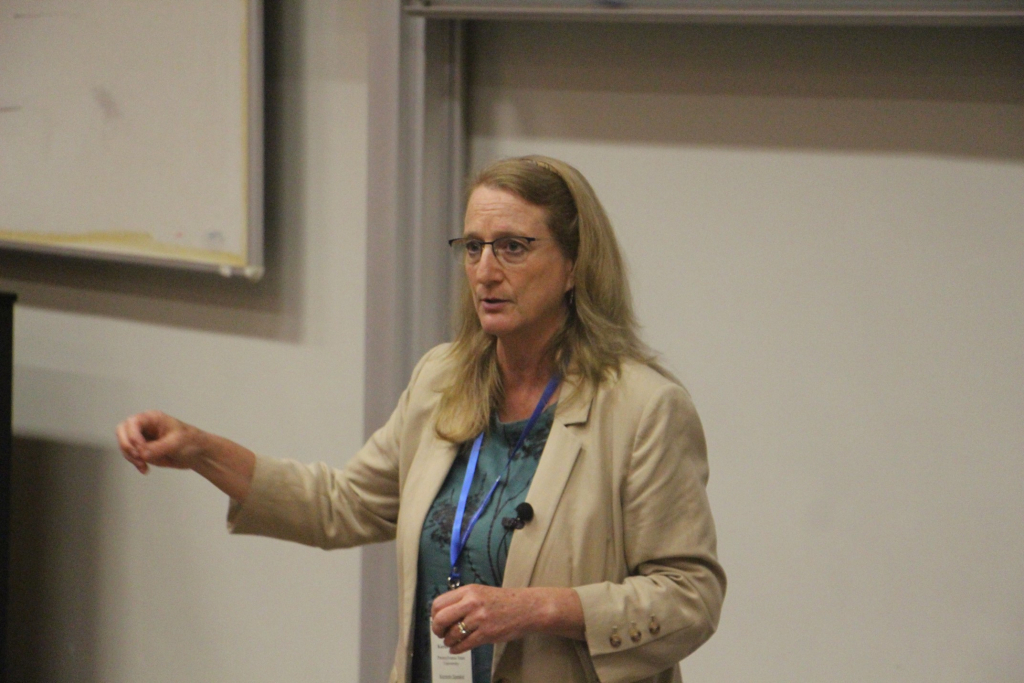
Prof. Karen E. Johnson
Penn State University, USA
Biography
Karen E. Johnson is a Kirby Professor of Language Learning and Applied Linguistics at The Pennsylvania State University, USA. Her scholarship has been devoted to building theory and conducting research within and for the field of L2 teacher education. Grounded in a Vygotskian sociocultural theory, her scholarship centers on understanding the learning of L2 teaching, the activity of L2 teaching, and the practices of L2 teacher education. She has published ten scholarly books, the most recent edited collection: Transformative L2 Teacher Innovations: Insights from Vygotskian Sociocultural Theory (2024, Routledge) with Paula R. Golombek & Jacob Rieker. She teaches courses in the MA TESL and the Ph.D. in Applied Linguistics degree programs.
Transformative L2 Teacher Education Innovations
More recent Vygotskian Sociocultural Theory (VSCT)-informed research in Language Teacher Education has been deliberate in embracing Vygotsky’s genetic method; that is, a theory is not designed to simply describe or explain psychological development but can be used to deploy specific principles and concepts to affect cognitive development intentionally and fundamentally through appropriately organized instructional activities. This plenary will highlight three VSCT-informed empirical research studies that are explicitly and intentionally designed to transform teacher reasoning (thinking) and teaching practices (pedagogical choices).
Employing i) concept-based language instruction with volunteer adult ESL tutors in a community-based education setting, ii) tiny talks as a mediational space for novice language teachers to reflect on and make sense collaboratively of their learning-to-teach experiences, and iii) a genetic-analytic case study of English-Medium Instruction faculty development in Taiwan, these studies illustrate the transformative potential that VSCT-informed innovations create for the professional development of language teachers.
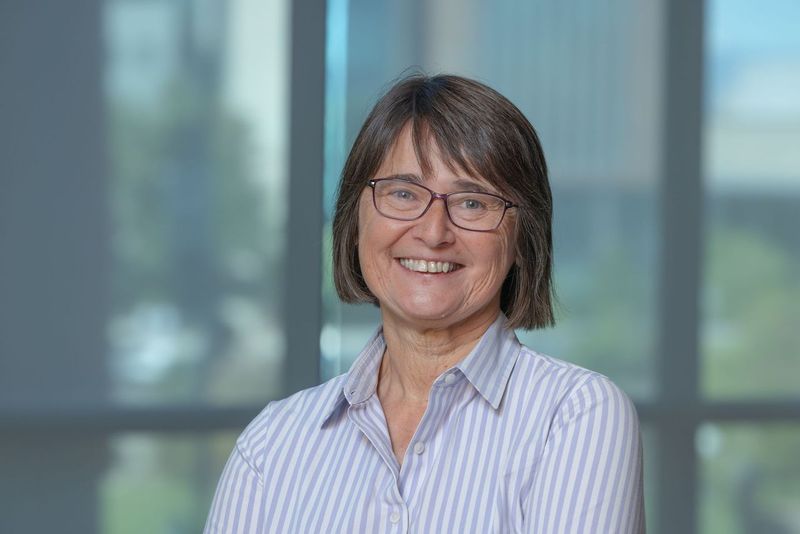
Prof. Ester De Jong
University of Florida
Biography
Ester de Jong is Professor in the Culturally and Linguistically Diverse Education program at the University of Colorado Denver. Prior to UC Denver, she was the Director of the School of Teaching and Learning and Professor in ESOL/Bilingual Education at the University of Florida in Gainesville, Florida. She has been in the field of ESL/bilingual education for over thirty years, as a practitioner and a researcher. Her research focuses on preparing teachers to work with bilingual learners in K-12 schools, and integrated approaches to the schooling of bilingual learners, including two-way bilingual education. Dr. de Jong was President of TESOL International Association (2017-2018) and currently serves as editor of the Bilingual Research Journal. Her recent co-edited books include the Handbook of Dual Language Bilingual Education (Routledge, with Juan Freire & Cristina Alfaro) and English language learners in the Southeast (Lexiington Books, with Eric Dwyer, Mary Elizabeth Wilson-Patton)
Multilingualism within a Monolingual Habitus: Challenges, Possibilities, and Complexities
Despite the research base in support of bi/multilingualism, policies and practices in our schools continue to reflect monolingual assumptions. Constructing what Rebecca Freeman called “alternative discourses” is challenging, yet we see many possibilities within teacher preparation as well as school-based practices. In this talk, we will explore what a multilingual habitus could look like, while recognizing the complexities we face as educators.
Workshop Sessions (10:30am – 11:25am)
Workshop: Unlocking Memory Mastery: The Power of Memory Pegs in Language Learning
May Zafra, Turner English College, Academic Manager
This presentation introduces the use of memory pegs as a practical and engaging strategy for improving vocabulary retention in English learning. Memory pegs involve assigning vivid mental images to numbers (e.g., 1 = sun, 2 = socks) and linking these to target words or concepts, making them easier to recall and apply.
The workshop will begin with a brief overview of the psychology behind memory pegs and how they support long-term memory. The interactive component will guide participants in creating their own 1–10 peg list using culturally meaningful and personally relevant images. Participants will then apply this technique to remember and retrieve a set of English vocabulary.
Through this hands-on activity, educators will experience how memory pegs can be integrated into regular classroom practice to support learners of all ages and levels. The session will conclude with a collaborative reflection on how this method can be adapted for different teaching contexts, such as vocabulary-building lessons, speaking activities, or review games.
By the end of the session, participants will leave with a ready-to-use technique that enhances learner engagement, supports retention, and brings a creative twist to language learning.
Keywords: Memory pegs, vocabulary
Presenters
May Red Zafra is an experienced educator with a passion for empowering students to achieve their language goals. She is known for her innovative teaching methods, including the use of memory pegs and structured learning strategies. May has developed comprehensive workbooks, children’s stories, and educational materials that inspire learners of all ages. Her mission is to create engaging, effective, and practical resources that bridge educational gaps and support students in reaching their full potential. Based in Melbourne, Australia, May is dedicated to making a positive impact in education and beyond.
Workshop: Empowering EAL Students: Enhancing Reading Comprehension Through Metacognitive Reading Strategies
Dr Lilly Yazdanpandah, La Trobe University
Metacognitive thinking is a higher-order cognitive skill that involves the ability to monitor, regulate, and evaluate one’s own thought processes (Flavell, 1979). EAL students who engage in metacognitive thinking strategies demonstrate greater retention and application of vocabulary in writing and speaking, stronger listening and reading comprehension skills, increased confidence in learning, and reduced anxiety about making mistakes. However, fostering these skills requires intentional teaching approaches that acknowledge the strengths EAL learners bring, rather than focusing on perceived challenges.
This interactive workshop is designed to provide teachers with practical, evidence-based strategies to integrate metacognitive instruction into reading comprehension activities in meaningful ways. Through hands-on engagement, participants will explore techniques that encourage self-regulation, comprehension monitoring, and the application of targeted reading strategies. More than just a set of strategies, this workshop offers an opportunity to build a learning environment where both students and teachers evolve —where EAL students feel valued, capable, and supported, and where educators, in turn, gain new insights from the diverse experiences their students bring to the classroom.
Keywords: Metacognitive Strategies, Reading Comprehension, EAL Student Reading, Metacognitive Thinking Instruction
Topic/Track: Research and innovation in TESOL
Facilitator
Dr Lilly Yazdanpanah is a Lecturer in the School of Education at La Trobe University. Her research focuses on equity, cultural diversity, and teacher cognition and identity in English language classrooms. With over 20 years of experience in higher education across five countries, she has worked extensively as a TESOL teacher educator and researcher. Lilly’s work with pre-service and in-service teachers explores best practices for supporting EAL/D students in Australia and internationally, integrating both national and global perspectives.
Workshop: Integrating phonics, decoding & spelling skills in an EAL program
Integrating phonics, decoding & spelling skills in an EAL program
Sarah Douglas, River Nile School, Lead Teacher – Teaching & Learning
This workshop will share the results of an action research project undertaken by teachers, learning support workers and leading teachers at River Nile School. The River Nile School is a Senior Secondary School for young women from refugee backgrounds. Our students are all EAL learners who are completing the Victorian Pathways Certificate or VCE Vocational Major. Our group identified that our students needed explicit phonics instruction as part of learning essential literacy skills. However, we felt we lacked the knowledge, skills and resources to teach these skills effectively. Over the course of a semester, we engaged in a range of activities to collect & analyse student learning data, research best-practices and work with a Speech Pathologist to develop our own strategies and resources to incorporate explicit teaching of phonics in EAL lessons. In this workshop we will share our work on this project and engage participants in:
- Reflecting on their own knowledge & skills for phonics instruction
- Understanding how to assess & analyse student learning data
- Classroom activities to target explicit phonics teaching within EAL & other curriculum lessons
Keywords: phonics; early literacy; EAL; young adult; refugee
Topic/Track: TESOL in practice: EAL 101
Facilitator
Sarah is a Lead Teacher at River Nile School, responsible for leading curriculum and teaching & learning practices that support EAL & refugee background learners to succeed in the Victorian Pathways Certificate and VCE Vocational Major. She is committed to empowering young women from refugee backgrounds to develop the skills and knowledge they need to thrive in life, work and further education. Prior to her time at River Nile School, she worked in a range of school settings as a teacher and instructional leader.
Workshop: Meet Australia’s dynamic Indie writers: explore the skill of writing EAL stories that work and gain insights into self-publishing
Carmel Davies, Sharon Duff, Clare Harris & Lauren Piovesan
Teachers are constantly writing so many stories, worksheets, quizzes and games … but how can they take this skill to the next level?
In this practical hands-on session, teachers will work in small groups, with an innovative EAL writer. Unpack the craft used to write culturally inclusive, engaging and funny stories that celebrate multilingualism.
Learn some strategies on writing stories that will improve oral and reading skills and are finely adjusted to the language levels of different learners.
What tips do the Indie writers have? Come with your questions!
Here’s a taste of some of the topics that will be covered:
- Self-publishing – is it worth it?
- Print or digital?
- Copyright & intellectual property
- Making resources widely available
- Meeting mandated curricula and assessment demands
- Bring along your ideas or sample pages from resources you’ve created.
Keywords: publish write innovation culturally inclusive
Facilitators
Sharon Duff and Carmel Davies (with Maggie Power) are co-founders of Urban Lyrebirds, one of Australia’s leading independent EAL publishers. They have created and published award winning, English language resources to inspire learners and invigorate teachers, including the Sing with me! song books, Sing with me stories, Passages 1, 2 and 3 and May Street stories. Carmel and Sharon are currently writing and delivering workshops on songs and stories to teachers around Australia.
Sharon has been teaching English for over 20 years at all language levels. She has delivered multiple workshops and created numerous teaching materials, including writing textbook and e-learning resources for the Australia-wide Distance Learning course Your call.
Carmel has wide experience in EAL/D. She has written numerous resources including Australian Law for New Arrivals, Pictures to Words and May Street Stories. She researched ESL through Performance with a Churchill fellowship and directed highly acclaimed performances based on student stories.
Lauren Piovesan is the founder of ESL Reads, a social enterprise dedicated to creating engaging stories for adolescent and adult EAL/D learners in both digital and print formats. With experience teaching secondary EAL, VCAL, and Learning Support in various schools and sectors, she understands the power of storytelling in literacy development. Her resources focus on developing accessible, relatable narratives that help students build confidence, improve their oral and reading skills, and see their own experiences reflected in the texts they read.
Clare Harris is the founder of the Book Next Door, creating a range of EAL/D reading books and learning resources. She started her teacher-turned-writer career with NCELTR projects – It’s Over to You and Get Wise. Her titles include Welcome to Hope Street, Maybe Next Year and The Coat, as well as puzzle books and her latest Tabletop English games and activities. On request from librarians, she is currently working on some easy Read About Australia books. Her other passion project is creating dementia-friendly reading books, with the same goal of making reading accessible to everyone.
Workshop: Beyond Boundaries: Multilingual Artistry in Contemporary Picture books
Assoc-Prof Julie Choi, Dr Jack Tan Dr Rafaela Cleeve Gerkens, Dr Andrea Truckenbrodt
Faculty of Education, University of Melbourne
How do we help our students see their multiple languages and cultural experiences as strengths rather than barriers? This workshop examines carefully selected picture books that showcase how authors and illustrators draw on their rich multicultural backgrounds to create powerful stories. Whether you speak one language or many, your perspective is valuable in supporting students’ multilingual development. We’ll explore how creators weave together different languages, cultural symbols, and artistic elements in ways that go far beyond simple translation. Through detailed examples from books like “A is for BEE” by Ellen Heck and “The Arrival” by Shaun Tan, we’ll discover practical ways to use these books as teaching tools in your classroom. You’ll learn how to help students notice and discuss creative language choices, analyse visual storytelling techniques, and gain confidence in bringing their own languages and cultures into their writing. We’ll also explore specific strategies for using these books as mentor texts to support student writing. Whether you’re teaching primary, middle, or high school students, you’ll leave with concrete ideas for celebrating linguistic diversity and helping students see themselves as capable multilingual creators. Join us to discover how these remarkable picture books can transform your approach to teaching writing in not just multilingual classrooms but any classroom.
Keywords: multilingual literacies, picture books, student writing, cultural diversity, teaching strategies, mentor texts
Topic/Track: TESOL in practice: EAL 101
Presentation Type: Workshop
Facilitators
A/Prof Julie Choi leads the Master of TESOL and Modern Languages Education courses in the Faculty of Education, University of Melbourne. She is co-editor and author of multiple books on language, culture, identity, autoethnography, plurilingualism, and academic writing.
Dr Jack Tan: is Lecturer, Language and Literacy Education at Melbourne University’s Faculty of Education. He is a trained English and EAL teacher who has worked across Singapore, Shanghai and Melbourne. Jack’s PhD from RMIT University used critical autoethnography and poetic inquiry to explore and create his transcultural teaching experience across Asia and Australia. Jack is also a resident tutor and mentor at Janet Clarke Hall, a college of Melbourne University; and a piano player for worship bands at St Jude’s Anglican Church.
Dr Rafaela Cleeve Gerkens: (BA/LLB (Hons), DML, MTeach, GC-EDRES, PhD) is a lecturer in Language and Literacy and Arts Education in the Faculty of Education at the University of Melbourne. Her research areas include drama-rich pedagogy for learning across the curriculum and arts-rich experiences to support development of children’s language and literacy development.
Dr Andrea Truckenbrodt: is a Lecturer in Languages and Literacy Education at the Faculty of Education at the University of Melbourne, where is mainly involved in pre-service teacher education. She has taught German, English and EAL from kindergarten to university level. Picture story books are her passion and most favourite pedagogic tool, given their potential to support learners’ multilingual and multiliteracy development as well as their creativity and well-being.
Presentation Sessions (11:30am – 11:55am)
Presentation: Content language teacher collaboration in multilingual schools: What we learn from theory, research and practice
Dr Minh Hue Nguyen, Faculty of Education, Monash University, Senior Lecturer in EAL/TESOL Education
English as an additional language (EAL) students make up a large proportion of the school population in Australia, including the state of Victoria. On transitioning to mainstream schools, EAL students need language support to access the content area curricula. Language-content teacher collaboration has been one of the key ways to address their learning needs. This presentation provides an overview of the TESOL field’s knowledge base about language-content teacher collaboration from theoretical, empirical and practical perspectives. It begins with a brief description of the EAL context in Victoria in terms of learners, policy, curriculum and pedagogy. It then reviews influential models of content-language teacher collaboration (e.g., Baecher & Bell, 2011; Bell & Baecher, 2012; Davison, 2006; Honigsfeld & Dove, 2019), followed by the benefits of content-language teacher collaboration for learners and teachers. Subsequently, empirical insights from three Victoria-based case studies on content-language teacher collaboration are presented. These include two case studies of in-service teacher collaboration in two secondary schools and one case study of pre-service teacher collaboration at a university. The presentation ends with recommendations for theory, research and practice in fostering effective language-content teacher collaboration in supporting EAL learners.
Keywords: EAL, language-content teacher collaboration, multilingual schools
References
Baecher, L., & Bell, A. B. (2011). A “continuum” model of collaboration in ESL. Academic Exchange Quarterly, 15(1), 56–61.
Bell, A. B., & Baecher, L. (2012). Points on a continuum: ESL teachers reporting on collaboration. TESOL Journal, 3(3), 488–515. https://doi.org/10.1002/tesj.28
Davison, C. (2006, 2006/07/15). Collaboration between ESL and content teachers: How do we know when we are doing it right? International Journal of Bilingual Education and Bilingualism, 9(4), 454–475. https://doi.org/10.2167/beb339.0
Honigsfeld, A., & Dove, M. (2019). Preparing teachers for co-teaching and collaboration. In L. C. d. Oliveira (Ed.), The Handbook of TESOL in K‐12 (pp. 405–421). John Wiley & Sons Ltd. https://doi.org/10.1002/9781119421702.ch26
Presenter
Dr Minh Hue Nguyen is a Senior Lecturer in EAL/TESOL Education at Monash University. She has over 20 years of experience in EAL/TESOL teacher education, research, and community engagement in Asian and Australian institutions. Her publications focus on language teachers’ development of professional knowledge, identity, emotion, and agency, and collaboration with content teachers.
Presentation: Where is the plurilingual child in understandings of wellbeing?
April Edwards, The University of Melbourne, Teaching Academic, Dr Annie Gowing, The University of Melbourne,
As EAL teachers and researchers many of us understand that valuing and harnessing students’ intercultural and linguistic knowledge across all known languages is beneficial for them both socially and academically. Plurilingual approaches support communicative competencies and multilingual identity formation. In particular, when EAL students are given the choice to draw on all known knowledge systems, a sense of legitimacy, agency and autonomy is promoted. However, perhaps we are not doing so well in communicating the positive relationship between EAL students’ multilingualism and their sense of wellbeing. This presentation reports on recent findings of an interdisciplinary scoping review which examined how multilingual students’ wellbeing is being framed in the broader academic literature outside of languages research. Based on these findings, considerations for the benefits of engaging more explicitly with policymakers, researchers and school leaders outside of our own domain will be outlined and suggestions provided for how EAL educators might better communicate the value of plurilingual approaches in supporting EAL students’ wellbeing.
Keywords: Wellbeing, plurilingualism, connectedness, agency, belonging
Presenters
Dr Annie Gowing leads Wellbeing Specialisations in the Master of Education at The University of Melbourne. With a background in both social work and education, she has been active in the area wellbeing policy and wellbeing in schools for over 25 years. She began her career as a secondary teacher before working in student support and leadership roles. The ways in which student wellbeing is understood, implemented, monitored and evaluated in schools is a longstanding practice, policy and research focus of hers, particularly in areas of school connectedness, the teacher-student relationship, interpersonal communication, intercultural understandings and compassion and care.
April Edwards is a lecturer in The University of Melbourne working across the Master of Teaching and the Master of Education programs. Her background is as a secondary English and EAL teacher, EAL coordinator and led the use of EAL pedagogies across the secondary curriculum. She currently develops and delivers Master of Teaching (Secondary) TESOL learning area and core Languages and Literacies subjects. Her research interests include how diverse student teachers experience linguistically inclusive approaches to teaching based on their unique lived experiences and ways to communicate more pluralistic, inclusive and holistic understandings of diverse school students.
Presentation: AI literacy: exploring experiences of adult EAL learners from migrant and refugee backgrounds
Dr Katrina Tour & Mary Wallace
AI literacy has become widely recognised as critically important for adult language learners from migrant and refugee backgrounds. However, its inclusion in language programs requires knowledge about learners’ experiences with AI. This presentation reports selected findings from a large mixed-method study which explored the uses of generative AI within one Australian government-funded adult education program. The study included a survey and focus groups, representing participants across Australia. Drawing on a socio-cultural perspective, the presentation explores AI literacy of adult English as an Additional Language (EAL) learners from migrant and refugee backgrounds within their everyday contexts. The study found that the majority of the survey participants either had not heard about generative AI, or had never used it. Nevertheless, the focus group participants who used generative AI reported positive attitudes and emerging repertoires of AI literacy practices associated with learning, everyday tasks, leisure pursuits and professional activities. While these participants showed emerging, though fragmented, AI literacy capabilities, there was a significant proportion of language learners without any apparent AI literacy capabilities. This suggests that these learners are missing out on learning opportunities afforded by AI, which further reinforces the disadvantage. The presentation concludes with implications for policy and practice.
Keywords: AI literacy, EAL, adult learners, migrants and refugees, generative AI Topic/Track: Technologies and TESOL
Presenters
Katrina Tour Senior Lecturer in the Faculty of Education at Monash University. Her research focuses on the digital literacies of children and adults from refugee and migrant backgrounds. It investigates the ways in which these groups use digital technologies in English as an Additional Language (EAL) for life, learning and employment, and how these experiences can be used to enhance educational policies and pedagogies for digital literacies in EAL/TESOL settings. Katrina recently co-authored Enhancing Digital Literacies with Adult English Language Learners (Routledge, 2022) and Digital Empowerment for Refugee and Migrant Learners: Applying Strengths-Based Practice to Adult Education (Routledge, 2025).
Mary Wallace Director of LWA, works to support best practice in adult English language education. To underpin this mission, LWA conducts research at a national level, designs and facilitates professional learning nationwide, and develops resources for publication. LWA is the Commonwealth Quality Assurance Service Provider for the AMEP and SEE Program. Mary has an all-encompassing background managing the quality assurance aspects of adult English education programs, including strategic planning, business development, financial oversight and communications and relationship management. In her role, she draws on her extensive teaching experience in Australia and overseas, having taught in community, workplace and tertiary settings.
Presentation: Security and (in)securitisation in the ESOL classroom (Language policy)
Prof Ben Rampton, Kings College London
ESOL classrooms in the UK have operated on the frontline of migration politics for a long time, variously seen as sites of assimilation or spaces for the development of agency and voice. How far and in what ways, though, are they affected by the ongoing reconfiguration of global order and the rise of authoritarian nationalism? This talk presents ‘securitisation’ as a notion that can help us reflect on this.
Securitisation is a mode of governance and a powerful discourse that refers to existential threats of violence and death, and suspends normal laws and rules, creating a state of exception. It makes ‘enemy’ and ‘fear’ the central driver of politics, displacing the democratic principles of freedom and justice. Because security to one person can be insecurity to another and this can quickly change with the situation, we also need to talk about ‘(in)securitisation’ if we want to understand how securitisation affects its targets.
But securitisation is unlikely to operate on its own in ESOL classrooms, and we need to set it alongside two other very influential systems of governance – standardisation and marketisation. Standardisation turns language into form of measurement, seeks literate citizens, and carries the message ‘conform!’. Marketisation ties language to profit, prioritises consumers and entrepreneurs, and seeks people who ‘shine!’. Securitisation adds another dimension: language becomes a shibboleth or a weapon, society is threatened by enemies and traitors, and people are told to ‘stay alert!’.
Many different things happen in ESOL classes, and even within the familiar pressures of standards and marketisation, a lot of it is life-affirming. But how should we respond to intensifying (in)securitisation? Are we becoming its agents or victims? Are classrooms turning into sites of surveillance – or shelter? What and how can we learn about this from our students? My talk builds on a workshop run by the Hub for Education & Language Diversity (www.kcl.ac.uk/held), an ongoing collaboration between King’s College London and the non-profit ESOL organisation, English for Action (www.efalondon.org).
Presenter
Ben Rampton works part-time as Professor of Applied & Sociolinguistics at King’s College London. He does interactional sociolinguistics, and his interests cover urban multilingualism; youth, ethnicity and social class; conflict and (in)securitization; and language education policy and practice. For two days a week, he works with English for Action, a non-profit organisation where he volunteers in an ESOL class and runs a conversation club.
Flash Presentations
EAL policy enactment in regional area: A case study of a secondary Catholic school
Mai Thi Phuong Thao, Deakin University
Mai Thi Phuong Thao received the Doctoral scholarship from Deakin University in 2023 and is currently a PhD candidate in Education at Deakin University. Her Doctoral project explores the classroom teachers’ perspectives regarding EAL policy enactment in regional Australia. Her research interests focus on education policy, intercultural competence, teacher education and researcher development.
The importance of the explicit teaching of handwriting to EAL Secondary students
Margaret Edwards, Noble Park English Language School
Noble Park English Language School Author Biography: MTESOL, MSc In Education Management, 35 years in teaching EAL, Teacher trainer in EAL, Teacher in London, Melbourne and China
From Struggle to Story
This session outlines a structured approach for supporting EAL and newly arrived students who face foundational literacy challenges, especially secondary students.
Beginning with explicit handwriting instruction and awareness of script differences (e.g. Dari/English), the journey moves through mastery of high-frequency words to phonics patterns and then on to students creating their own book using AI.
From struggle into a meaningful and expressive storytelling experience – come and enjoy the journey!
Presentation Sessions (12:00pm – 12:25pm)
Presentation: Creating Resources to Support Indigenous Perspectives in Early Childhood Education
Assoc Prof Anne Keary, Assoc Prof Janet Scull (Monash university), Tim Clark (KESO, Department of Education), Megan Hancock (Preschool Teacher, Southern Rise Children’s Centre, Wodonga), Jess Pollard
The Northern Oral Language and Writing through Play (NOW Play) is a Canadian SS&HRC-funded initiative aimed at enriching pedagogical practice in early childhood education, Indigenous education, and language and literacy teaching. As Australian contributors to this project, our goal was to collaborate with early childhood educators, and Indigenous communities in a regional area of Victoria to foster young children’s Indigenous language, cultural learning, and overall literacy development.
This study is grounded in sociocultural theory which examines the culturally shaped nature of children’s interactions with their environment and the role of mediated experiences (Vygotsky, 1978).
The study’s methodologies were co-designed with participants and involved video recordings of children engaged in collaborative, play-based learning. These experiences affirmed children’s language abilities and cultural identities, which were further strengthened when family and community language resources and traditions were acknowledged (Scull et al., 2023). In alignment with the broader NOW Play research program, this study linked play and writing by analysing activities and texts generated during interactions. Data interpretation was carried out by the extended research team, who reviewed the videos and devised teaching strategies.
The findings highlight that creating resources to support children’s Indigenous language, cultural knowledge, writing, and experiential learning—facilitated through collaborative action research—helped enhance meaningful teaching practices. Keywords: Indigenous perspectives, Early Childhood Education, Play-based Learning Topic/Track: Research and innovation in TESOL Presentation Type: Presentation
Presenters
Assoc-Professor Anne Keary’s research, education and engagement work enhances the provision of socially just education in diverse cultural and linguistic educational settings. She teaches Early Childhood Education undergraduate and postgraduate courses. prioritises an interdisciplinary collaborative approach engaging with other disciplines, universities and industry partners.
Janet Scull is an Associate Professor at Monash University, coordinating undergraduate and graduate programs in teacher education. Her research interests focus on the areas of language and literacy acquisition, literacy teaching and assessment and teaching practices that support the continuity of children’s literacy learning across early childhood settings and the early years of schooling.
Tim Clark (KESO, Department of Education) is a Koorie Engagement Support Officer (KESO) with the Department of Education. He has provided support to the NOWPlay project at Southern Rise Children’s Centre Wodonga.
Megan Hancock (Preschool Teacher, Southern Rise Children’s Centre, Wodonga) is a passionate Early Childhood Teacher with 15+ years of experiences fostering play-based learning for children aged 3-5 years. She is committed to nurturing social, emotional and cognitive growth through tailored educational programs and strong partnerships with families and local community members.
Jess Pollard has worked in education for 19 years, working in early childhood and primary education. Jess has worked as a kindergarten teacher for ten years and is currently teaching foundation in primary school.
Presentation: Multilingual Parenting and Family Language Policy: Promoting Language Acquisition at Home
Dr Raqib Chowdhury, Monash University, Senior Lecturer
This study examines the role of multilingual parenting and family language policy (FLP) in fostering language acquisition and its broader implications for language education. Through in-depth case studies from Indonesia and Vietnam, it explores how informal language practices within families contribute to bilingual development. In one case, an Indonesian mother deliberately implemented an FLP by consistently speaking English with her children, enhancing their English proficiency. Conversely, in Vietnam, a child initiated English learning by teaching her mother through daily interactions, illustrating a unique bottom-up language acquisition process. These cases highlight the fluidity and reciprocity of language learning within families and the significance of heteroglossic practices in sustaining bilingualism. The study offers valuable insights for educators and policymakers by demonstrating how informal, home-based language interactions complement formal education. It also highlights the need for teacher education programs to acknowledge the impact of FLPs on students’ linguistic repertoires and suggests policy measures that support multilingual family environments. By bridging the gap between family language practices and institutional language education, this research provides practical strategies for fostering bilingualism in both home and school settings.
Keywords: family language policy, bilingualism, multilingual parenting, heteroglossia, language education
Presenter
Raqib Chowdhury is a Senior Lecturer in the Faculty of Education at Monash University and is a Senior Fellow of the UK Higher Education Academy. Raqib has published extensively in the areas of languages education, TESOL, sociolinguistics and education policy. His publications comprise of seven books with Springer, Routledge and Multilingual Matters and several award-winning papers. He is also a member in the Bilingualism Matters Advisory Committee (UK).
Presentation: Mobilising EAL learners’ cultural and linguistic resources through content and language integrated pedagogy in the Australian EAL classrooms
Leveraging EAL learners’ cultural and linguistic resources facilitates their learning process, cultural competencies, agency, and identities to bring their “whole sel[ves] into the classroom” (Ladson-Billings, 2021, p. 353). This study examines the affordances of Content and Language Integrated Learning (CLIL) pedagogy for expanding EAL teachers’ capacity to consistently integrate their learners’ cultural and linguistic resources in their practice. Although CLIL is a pedagogy developed specifically for the foreign language context, we argue for the relevance of CLIL’s key concepts and framework for EAL teachers to establish a multilingual, multimodal, and inclusive environment whereby EAL learners’ cultural and linguistic resources are mobilised effectively. The key findings show how using CLIL’s 4Cs Framework and Language Triptych helps teachers put learners’ cultural and linguistic considerations at the forefront of lesson planning and delivery, enabling them to implement various teaching practices—e.g., embodied and arts-rich translanguaging pedagogies—that are yet to be widely used in a formal EAL classroom context. The important implication arising from this study relates to practical ways for EAL teachers to consistently mobilise EAL learners’ rich cultural and linguistic resources while developing their confidence and competence to use English to communicate and demonstrate their meanings.
Dr Shu Ohki is a lecturer in Language and Literacy Education in the Faculty of Education at the University of Melbourne. He specialises in TESOL and Modern Languages teacher education and Content and Language Integrated Learning (CLIL) pedagogy. His research interests focus on investigating languages teachers’ professional knowledge and practices and the affordances of CLIL pedagogy in supporting culturally and linguistically diverse students’ process of learning.
A/Prof Julie Choi is Associate Professor in Education (Additional Languages) and leads the Master of TESOL and Master of Modern Languages Education courses in the Faculty of Education, University of Melbourne. She is co-editor and author of multiple books on language, culture, identity, autoethnography, plurilingualism, and academic writing.
Dr Rafaela Cleeve Gerkens is a lecturer in Language and Literacy and Arts Education in the Faculty of Education at the University of Melbourne. Her research areas include drama-rich pedagogy for learning across the curriculum and arts-rich experiences to support development of children’s critical language awareness.
Cath Ferla is a secondary EAL teacher at Western English Language School, a government school for newly arrived P-10 students in Melbourne. She has also taught in adult contexts in Melbourne, Sydney and Beijing. Cath is completing a Masters in TESOL with an interest in culture and identity. Cath is a published journalist, author and credited television screenwriter.
Thea Ho is an EAL Learning Specialist at Western English Language School. She works extensively with an EAL curriculum that centres around Functional Grammar and Genre-Based Language Teaching to prepare EAL/D learners for the mainstream classroom settings. Thea is passionate about providing students with meaningful, real-word contexts to facilitate effective and purposeful language acquisition, while engaging in a holistic learning experience.
Presentation: A CALD teacher’s identity negotiation across Australian and Asian educational institutions through innovative creative writing
Dr Jack Tan, University of Melbourne, Lecturer, Language and Literacy Education
In this presentation, I chart my educational journey as a culturally and linguistically diverse EAL and English teacher across Australia and Asia, using innovative creative and critical writing methods. Using poetic inquiry and critical autoethnography, I perform my stories of identity negotiation within systems and discourses of power: as I become an English major in meritocratic Singapore, teach English as a foreign language in megacity Shanghai and train as an EAL teacher of CALD students in multicultural Melbourne. Through these poems and their critical analysis, I reveal and disrupt the assumptions made on CALD educators and students. I then offer the audience an ars poetica (art of poetry) framework I developed during my PhD research, for writing reflective poetry on teacher’s critical incidents for identity negotiation. This talk would be of interest to EAL and English teachers wishing to explore innovative and original creative writing methods for reflection on their teacher professional identity and practice, as well as to offer their CALD students creative writing as a method of self-reflection. Keywords: CALD teacher identity, EAL teacher professional identity, creative writing methods for teacher reflection
Presenter
Jack Tan is Lecturer, Language and Literacy Education at Melbourne University. He is a qualified EAL and English teacher who has worked across Singapore, Shanghai and Melbourne educational institutions. Jack’s PhD from RMIT University used critical autoethnography and poetic inquiry to explore and create his transcultural teaching experience. Jack’s creative and critical writing has been published in journals including Qualitative Inquiry, Axon: Creative Explorations and The Looking Glass: New Perspectives on Children’s Literature. Outside his day job, Jack is a resident tutor and mentor at Janet Clarke Hall, a college of Melbourne University, and a piano player for worship bands.
Flash Presentations
Reorienting Second Language Teacher Education: Professional Learning in AI for Chinese English Teachers in Universities
Dan Zhou, Monash University
Dan Zhou is a PhD student, TESOL teacher and researcher and has 14-year experience in TESOL teaching and an additional 5-year experience in teacher education. His research focuses on TESOL teachers’ professional learning at different career stages, teachers’ identity, and AI application in TESOL.
Teachers’ digital technology practice with English as an Additional Language students in Victorian schools
Thu Ha Bui, Deakin University
Thu Ha Bui is a Graduate Researcher in Education at Deakin University, Australia. Her research interests lie at the intersection of educational technology and English language education. Her doctoral project is currently looking at teachers’ digital technology practice with English as an Additional Language students in Victorian schools, Australia.
Presentation Sessions (1:30pm – 1:55pm)
Presentation: Exploring the structure of stories with young learners
Lynette Lingard, Focus Literacy, Consultant
Story structures are different the world over, so exploring the structure of stories in English is crucial for our young EAL learners. As an EAL specialist teacher in Queensland, I have used various fun and engaging ways of exploring story structures to support my EAL learners to understand, plan and write stories, and this presentation will look at two units of work which focus on this. Every culture has a different way of telling stories, with the structures of those stories embedded in our understandings from an early age, making the explicit teaching of the structures found in English stories imperative for our EAL learners. The work we’ll do in this presentation on understanding story structures supports students to both comprehend and write stories. In this presentation, we will explore the ways a teacher can engage EAL learners in the process of understanding the structure of two different types of stories. We will consider how to use visuals to make the structure clear to students, along with the use of translanguaging to support our EAL learners to gain a greater understanding of the stories they are exposed to. We also look at the use of purposeful talk, image and text manipulation and joint construction in the units. We will consider the use of repetition and rhyme, and the way authors can use mini and major complications and resolutions to add interest to stories and to engage the reader. In these units, students are encouraged to be interactive and to use the techniques that they see authors use in their own writing. This presentation will showcase two units of work used in the lower primary setting to support EAL learners to overcome the challenges of understand English story structures.
Presenter
My career has centred on being an EAL Specialist in Queensland schools, where I worked with Education Qld for over 30 years, first as a classroom teacher, then as an Advisory Visiting Teacher and as a Principal Advisor Teaching and Learning/EAL. Upon leaving Education Queensland, I set up my own consultancy, Focus Literacy. I also currently work as Tutor Trainer and consultant for Lexis Education.
Presentation: Powerful Knowledge and EAL
Angela Di Sciascio, Gordon TAFE, EAL Teacher
What knowledge is powerful in EAL? This presentation will present research that examines powerful knowledge in EAL. Powerful knowledge, a curriculum principle central to a social realist approach to education sociology, is knowledge that is differentiated from everyday thinking, systematic, drawn from specialised disciplines and has an empowering potential (Young & Muller, 2013). Building on recent literature, the presentation will outline a holistic conceptualisation of powerful knowledge specific to EAL. The conceptual framework could be applied to any EAL curriculum, with this research specifically focussing on the adult sector. The presentation will argue that knowledge in EAL is powerful not only because it is specialised, systematic and differentiated from everyday knowledge of language, but also that powerful knowledge in EAL is nuanced and complex, encompassing three subject-specific aspects: powerful knowns (linguistic know-that); powerful knowings (linguistic know-how); and empowering knowledge (linguistic know-why). The conceptual framework presented in this session will challenge participants to think about the knowledge that underpins the curriculum they engage with, through the lens of the theory of powerful knowledge. Keywords: powerful knowledge; social realism; curriculum; Topic/Track: Research and innovation in TESOL Presentation Type: Presentation
Presenter
Angela Di Sciascio is a passionate EAL teacher who has worked in the adult sector for over 25 years. Angela is actively involved in state-wide networks including the EAL Framework Adult Sector Advisory Group and VicTESOL committee. She is currently the President of VicTESOL. Angela recently completed her Masters of Education where her research focused on analysing the knowledge underpinning the Victorian EAL Framework accredited curriculum.
Presentation: Plurilingualism in the classroom: A focus on practicality and mindset
Assoc-Prof Marianne Turner and Dr Katrina Tour, Monash University
In our research, we explore how teachers can adopt plurilingual strategies with multilingual learners – and all learners – in their classrooms in a meaningful and sustainable way. We have found teachers to be willing to encourage the active use of their students’ extended linguistic repertoire but have also noted some challenges. Specifically, a range of literacy practices and the presence of different home languages can be perceived by teachers as an obstacle to the embedding of students’ diverse language practices in their everyday education. In this presentation, we will draw on examples from a plurilingual resource map generated with teachers in a research project funded by the Victorian Catholic Education Authority to show how digital multimodal composing (DMC) can be used as a vehicle for engaging with linguistic diversity. We will explore how viewing DMC as a learning process, rather than only as leading to a ‘composition’, or product, can create opportunities for learning. This can require a mindset on the part of the teacher that is not only affirming of different languages but committed to working actively with students’ language knowledge and experiences to facilitate their learning.
Keywords: Plurilingualism; digital multimodal composing; linguistic diversity
Presentation Type: Presentation
Presenter
Marianne Turner is an Associate Professor and currently the Associate Dean (Graduate Research) in the Education Faculty at Monash University, Melbourne, Australia. She researches the leveraging of students’ linguistic and cultural resources for learning and context-sensitive approaches to the integration of language and content. Her work has been published widely in both language education and general education journals, such as Language Teaching Research and Teaching and Teacher Education. She has written a book entitled Multilingualism as a resource and a goal: Using and learning languages in mainstream schools (Palgrave Macmillan).
Katrina Tour is a Senior Lecturer in the Faculty of Education at Monash University. Her research focuses on the digital literacies of children and adults from refugee and migrant backgrounds. It investigates the ways in which these groups use digital technologies in English as an Additional Language (EAL) for life, learning and employment, and how these experiences can be used to enhance educational policies and pedagogies for digital literacies in EAL/TESOL settings. Katrina recently co-authored Enhancing Digital Literacies with Adult English Language Learners (Routledge) and Digital Empowerment for Refugee and Migrant Learners: Applying Strengths-Based Practice to Adult Education (Routledge).
Presentation: What does Critical Language Pedagogy look like in Japanese University EFL?
Dr Belinda Kennett & Dr Lachlan Jackson, Ritsumeikan University, The University of Queensland, Professor, Honorary Research Fellow
In Japan, education policy now explicitly calls for the development of English language proficiency alongside higher order intellectual skills (e.g. critical thinking, analytical and research skills, etc.). Critical Language Pedagogy (CLP) is one approach that can meet these aspirations. Marsh and Suzuki (2023) describe CLP as “aiming to do more than simply teach English”, and students are encouraged to explore and challenge the status quo. In this paper, we first describe the features of CLP and the context of English language teaching in Japan. Based on our study of 22 self-identifying critical English teachers (Jackson & Kennett, 2025), we then report on the different ways in which CLP is being implemented in Japanese university EFL courses. We also discuss the potential for CLP’s incorporation into a variety of teaching contexts and approaches. Finally, we offer some suggestions for how to incorporate elements of CLP into ESL/EFL teaching. References: Jackson, L. & Kennett, B. (2025). Critical language pedagogues in Japan: Enhancing student receptivity. ELT Journal 79(1). Marsh, R. & Suzuki, M.A. (2023) Imparting criticality and raising critical consciousness: Aiming to do more than simply teach English. The Center for English as a Lingua Franca Forum (3). (pp. 15-24). Keywords: Critical Language Pedagogy; Japan; Universities Topic/Track: Research and innovation in TESOL Presentation Type: Presentation
Presenters
Lachlan Jackson, PhD, is Professor in the College of Law, Ritsumeikan University, Kyoto, Japan, where he teaches English.
Belinda Kennett, PhD, is Honorary Research Fellow at the School of Languages & Cultures, The University of Queensland, Brisbane. Their collaborative work has appeared in such journals as Asian Englishes, ELT Journal, and the Electronic Journal of Contemporary Japanese Studies.
Belinda and Lachlan are currently collaborating on a collective case study of self-identifying critical pedagogues teaching English in Japanese universities. Their shared research interests relate to foreign/second language teaching and learning of English and Japanese.
Flash Presentations
Researching kindergarten children’s language learning: a lens on bilingual programs
Xiaofang Shang, Monash University
Xiaofang Shang is a last year PhD candidate in Monash University. She has worked with children aged six months to eight years as an educator, a teacher, an educational leader, and a kindergarten director over the last ten years. Xiaofang’s educational experience involves children’s psychology, Association Montessori Internationale, Master of Teaching and Master of Education. Her experience and interests primarily focus on early literacy and numeracy, diversity and inclusion, as well as multilingualism and translanguaging. Her PhD project explores kindergarten bilingual education in Victoria.
Exploring Student Teacher Engagement in TESOL Training Programmes: An Autoethnographic Study from Vietnam
Huy-Hoang Huynh, Monash University
Huy-Hoang Huynh is a PhD candidate in Education at Monash University. He holds a Bachelor’s in TEFL from the University of Education in Ho Chi Minh City and a Master’s in TESOL from Monash University, graduating as top student and recipient of the Dean’s Award for Academic Excellence. With over seven years of experience teaching English (EAP/ESP/EFL) across various contexts, Hoang’s research explores teacher professional development, identity formation, student engagement, and educational interactions. Committed to enhancing learning experiences, Hoang actively contributes to educational innovation and aims to positively impact the evolving educational landscape.
Presentation Sessions (2:00pm – 2:25pm)
Presentation: Phonemic symbols and hand gestures in pronunciation instruction. A shared metalanguage or cognitive overload?
Beth Zielinski & Elizabeth Keenan
Phonemic symbols and gestures are considered by scholars to provide a systematic representation of sounds (Passy, 2010; Underhill, 2005) and thus contribute to a shared metalanguage teachers and learners can use to communicate effectively about pronunciation (Chan, 2018; Fouz-González, 2020). However, research shows that teachers are reluctant to use phonemic symbols because they feel learning an extra set of symbols would be overwhelming and confusing, particularly for beginner-level adult learners with poor literacy skills (Kodirova & Henrichsen, 2022). In addition, very little is known about the efficacy of the systematic use of hand gestures in pronunciation instruction. In this study we investigate beginner-level adult learners’ understanding, use, and views of phonemic symbols and hand gestures, and the role they play in the development of pronunciation skills. Preliminary classroom observations revealed that beginner-level learners engaged with both phonemic symbols and hand gestures for instruction and feedback purposes. This exploratory study extends these observations utilising information from two different sources: (i) stimulated recall, where learners reflect on a video of themselves participating in a small group pronunciation lesson where phonemic symbols and gestures are used, and (ii) semi-structured interviews, where learners reflect on the role of phonemic symbols and gestures in pronunciation instruction. The findings of this study contribute to our understanding of best-practice pronunciation instruction.
Keywords: Pronunciation instruction, phonemic symbols, gestures.
Presenters
Beth Zielinski is an Independent Researcher in Melbourne. Her research interests are in the area of L2 English speaking, particularly the influence of different pronunciation features on effective communication. She is on the editorial board of the Journal of Second Language Pronunciation and her research and teaching has involved teachers and learners of English in many different settings in Australia.
Elizabeth Keenan is an English as an Additional Language (EAL) teacher and teacher mentor at Carringbush Adult Education in Richmond. She completed a Master of TESOL at the University of Melbourne. Elizabeth is an ISS Institute fellow who investigated best practice pronunciation teaching for beginner-level learners. Her professional role and interest include the teaching of pronunciation and literacy skills to learners with limited or interrupted formal education.
Presentation: AI integration in EAL education: How can teacher-researcher collaboration enhance AI teaching efficacy and support personalised learning for migrant and refugee students?
Dr Mingyan Hu, Louise Smith, Dr Tanya Tran, Linh Le-Dwyer
The rise of artificial intelligence (AI) in education is transforming language teaching and learning, yet its integration into English as an additional language (EAL) classroom presents both opportunities and challenges. While AI-powered applications offer personalised and differentiated learning, many EAL teachers and their adult migrant and refugee students may face challenges in exploring these affordances due to limited AI literacy and teaching efficacy. Targeted support and tailored resources, such as professional development (PD) for teachers, are therefore essential.
This panel discussion brings together researchers, teachers, and education leaders to share insights from a collaborative, classroom-based study on co-designing PD with EAL teachers. Panellists will explore how practical PD initiatives can be developed in partnership with teachers to enhance AI teaching efficacy and support personalised learning for migrant and refugee students. The discussion will highlight both the pedagogical affordances of AI and the practical challenges of implementation. This session offers valuable insights into how teacher-researcher collaboration can drive AI integration in EAL education, bridging the gap between emerging technologies and real-world teaching practices.
Presenters
Dr Mingyan Hu is a lecturer in Teaching English to Speakers of Other Languages (TESOL) at Griffith University with expertise in interdisciplinary research in technology-enhanced curriculum and teacher education. She is the supervisor of this research project and will facilitate the panel discussion.
Louise Smith is a higher degree research student at Griffith University researching EAL teachers’ use of AI. She is an experienced EAL tutor, with a long-standing interest in helping migrants and refugees increase their English proficiency for employment.
Presentation: Plurilingualism in the classroom: A focus on practicality and mindset
Clare Blackman & Kimberley Smith, Blackburn English Language School, Classroom Teacher
Effective differentiation ensures that all students, regardless of their language proficiency, can engage with and succeed in academic learning. The Teaching and Learning Cycle provides a structured framework for scaffolding language development, guiding students from supported participation to independent use of academic language. By integrating a Backward Design approach, educators can plan differentiation intentionally, ensuring all learners can access and achieve learning goals.
In this session, we will explore practical differentiation strategies at each stage of the Teaching and Learning Cycle, with a focus on Science and English. Drawing on examples from these subjects, we will demonstrate how to:
- Create shared language experiences that cater to different levels of English proficiency.
- Scaffold academic language through model texts, guided writing, and structured talk opportunities.
- Design differentiated assessment tasks and rubrics.
By embedding differentiation into each phase of the cycle, we empower students to build confidence, develop academic language, and take ownership of their learning. Participants will leave with practical strategies and adaptable examples that can be applied in their own classroom contexts.
Keywords: Differentiation, Teaching and Learning Cycle, Assessment
Presenters
Clare Blackman is an experienced EAL educator who has worked at Blackburn English Language School since 2015. She is also the Association Officer for VicTESOL, a professional organisation for those working in the TESOL sector. Passionate about supporting refugee and beginner-level EAL students, she first became interested in EAL teaching while working with asylum seekers in the Nauru detention centre. Clare holds a Master of Teaching (History & Humanities), a Master of TESOL, and a Graduate Certificate in Science Teaching. She enjoys the challenge of differentiating for students from different educational backgrounds and abilities and scaffolding academic language to empower EAL learners and support their success across subjects.
Kimberley Smith is an experienced EAL teacher committed to equitable and inclusive learning. She holds a Master of Teaching (Secondary) from the University of Melbourne and currently teaches at Blackburn English Language School, supporting secondary students in the New Arrivals Program. As Secondary Curriculum Support Leader, Kimberley has led teams to design innovative units aligned with the Victorian Curriculum F-10 (EAL) that scaffold learning and support differentiation. Passionate about empowering learners, Kimberley fosters classroom environments where every student can thrive and enjoys collaborating with colleagues to make learning engaging and accessible.
Presentation: In the Shadow of EAL and Trauma: Identifying and supporting refugee-background students with additional learning needs
Simone Cassidy, Refugee Minor Program, Education and Training Advisor
Children arriving in Australia as refugees benefit from tailored educational support to address the impacts of disrupted schooling, traumatic past experiences, ongoing settlement challenges, and the demands of learning in a new language. Despite facing common challenges, refugee-background students are not a homogenous group. Each student brings a distinct set of learning strengths and challenges, and individualized approaches are essential. This presentation will delve into case studies of refugee-background students in Victorian primary and secondary schools, exploring the complex interplay between English language acquisition, trauma-related responses, and possible neurodivergence. The discussion will highlight the challenges educators face when trying to disentangle these intersecting factors to identify learning needs and provide appropriate support. Participants will be encouraged to reflect on existing practices, particularly how traditional methods of identifying at-risk learners and referring them for assessments may inadvertently disadvantage refugee-background students. The presentation will include a discussion of processes for identifying the learning needs of at-risk EAL learners in both Australia and the United Kingdom, with a focus on promoting culturally and linguistically responsive practices that not only address the intersection of language acquisition and trauma, but also remain attuned to the possibility of neurodivergence. Keywords: Refugee-background students, learning difficulties Topic/Track: Research and innovation in TESOL Presentation Type: Presentation
Presenters
Simone Cassidy is an Education and Training Advisor within the Refugee Minor Program (Department of Families, Fairness and Housing, Victoria). Simone has a background in teaching and delivering professional development. Simone is especially interested in how systemic changes to policy and practice might better identify and support refugee-background students with a learning difficulty or disability. In mid-2025, Simone will travel to the United Kingdom on a Churchill Fellowship to learn from UK experts about the intersection between EAL and special educational needs. Simone looks forward to sharing the learnings to strengthen outcomes for refugee-background students.
Flash Presentations
The role of AI technologies in multilingual academic literacy practices
Melissa Slamat
As we move towards a digital future, multilingual university students increasingly engage with AI technologies including machine translations and GenAI as part of their academic literacy practices (ALPs) (e.g., reading and analysing academic text, critical thinking, note-taking, writing academic essays). While some view these practices as problematic and potentially encouraging academic misconduct, others recognize their crucial role in students’ language and literacy development. Rather than focusing solely on modifying assessments to prevent ‘cheating’, this study argues for the importance of examining the complex processes of how these ALPs are carried out, thereby informing changes on academic literacy instruction. Set within a graduate coursework subject at an Australian university, this study investigates one multilingual university student’s step-by-step processes in writing an argumentative essay. Data from interviews, screen recordings, and written assignments reveal how the multilingual student’s ALPs are shaped not only by AI technologies alone but also by classroom environment, peer interactions, one’s funds of knowledge and identities, and multiple languages utilised for learning. By emphasising AI technologies as one element in carrying out ALPs, we invite educators to consider how their pedagogical practices can leverage students’ use of AI tools in language learning and literacy skill development. To guide educators in this process, we offer some ideas such as designing tasks that showcase students’ multilingual resources, identifying dense academic phrases to be unpacked collaboratively, as well as showing and telling bilingual reading strategies.
Perceived Role of English for Specific Purposes in Meeting Professional Needs: Insight from Indonesian University Students
Nurlaily Nurlaily, Faculty of Education, Monash University
Nurlaily is a PhD candidate at the Faculty of Education, Monash University. Her research interests are bi/multilingualism, identity and English for Specific Purposes. With a background as a teacher educator in Indonesia, she has conducted research on English learners at both school and university levels.
Workshop Sessions (2:30pm – 3:25pm)
Workshop: ICT for EAL: Practical Tools for Language Learning
ICT for EAL: Practical Tools for Language Learning
Eliza Demasi, Pembroke School, EAL Teacher and Acting Assistant Head of Mellor House
In today’s digital world, technology plays a crucial role in enhancing language learning. This interactive workshop, designed for EAL educators, will explore practical ICT tools that support English language acquisition. Led by an in-practice EAL teacher, the session will showcase tried-and-tested digital resources, including Microsoft Teams’ Learning Accelerators, interactive platforms like Quizlet and Booklet, using AI for teaching, as well as other tools, tips, and tricks to make ICT work for you.
Participants will gain hands-on experience with these tools, discussing their applications in the classroom for developing student learning. Attendees will have the opportunity to discuss their own experiences with ICT in EAL teaching, exchange ideas, and reflect on best practices. By the end of the session, participants will leave with a toolkit of innovative strategies and practical insights to enhance their own teaching practice. Whether you’re new to educational technology or looking to refine your approach, this workshop provides a space to explore, experiment, collaborate and engage with the possibilities of ICT in EAL education.
Keywords: ICT, technology, collaboration, sharing
Topic/Track: TESOL in practice: EAL 101
Facilitator
Eliza Demasi is a secondary school EAL teacher at Pembroke School, South Australia. With experience in migrant English programs and adult business English, she earned a Master of Teaching (TESOL and Languages) in 2019. The rapid shift to online learning during the pandemic refined her ICT skills, shaping her teaching approach. She later completed a Graduate Certificate in Digital Learning at UniSA, deepening her expertise in technology-enhanced EAL instruction. Passionate about integrating ICT into language learning, Eliza continues to explore innovative digital tools to support diverse learners in the EAL classroom.
Workshop: Story-based approach to teaching EAL in an adult classroom
Tanja Rykovska, Chisholm Institute of TAFE, EAL Teacher
A story-based approach to teaching English as an Additional Language (EAL) in an adult classroom provides a dynamic and engaging way to foster language learning. By integrating storytelling into the curriculum, instructors tap into the natural human affinity for narratives, creating a context for language use that feels authentic and meaningful. Adults of diverse backgrounds and life experiences, benefit from the emotional and cultural connections that stories offer. This approach not only enhances vocabulary acquisition, grammar, and pronunciation, but also encourages critical thinking, problem-solving, and empathy. Through stories, learners can practice language skills in realistic, contextualized scenarios. The story-based approach promotes a safe, interactive learning environment where learners feel empowered to share their own stories, making language learning a more personalized experience.
During the workshop, participants will have the opportunity to design their own story-based learning session using a structured outline provided by the presenter. This hands-on approach will guide participants through the process of incorporating stories into an EAL learning session. The outline will help participants identify key components such as setting objectives, selecting appropriate stories, and integrating language skills practice, all while considering the cultural and emotional relevance of the chosen narratives. This collaborative process will encourage creative thinking and allow participants to share ideas and feedback with their peers, further enhancing their learning experience.
Keywords: adult EAL story-based contextualised learning
Presenter
Tanja Rykovska is an experienced EAL teacher with a deep interest in inclusive and engaging learning environments. Tanja has worked with diverse groups of adult learners, helping them develop essential language skills through creative methods. She is particularly interested in using story-based approaches to teaching, recognising the power of narrative in fostering language acquisition and building authentic connections among learners. Tanja enjoys sharing her knowledge and expertise with other educators and learning from peers.
Workshop: Unlocking Memory Mastery: The Power of Memory Pegs in Language Learning
May Zafra, Turner English College, Academic Manager
This presentation introduces the use of memory pegs as a practical and engaging strategy for improving vocabulary retention in English learning. Memory pegs involve assigning vivid mental images to numbers (e.g., 1 = sun, 2 = socks) and linking these to target words or concepts, making them easier to recall and apply.
The workshop will begin with a brief overview of the psychology behind memory pegs and how they support long-term memory. The interactive component will guide participants in creating their own 1–10 peg list using culturally meaningful and personally relevant images. Participants will then apply this technique to remember and retrieve a set of English vocabulary.
Through this hands-on activity, educators will experience how memory pegs can be integrated into regular classroom practice to support learners of all ages and levels. The session will conclude with a collaborative reflection on how this method can be adapted for different teaching contexts, such as vocabulary-building lessons, speaking activities, or review games.
By the end of the session, participants will leave with a ready-to-use technique that enhances learner engagement, supports retention, and brings a creative twist to language learning.
Keywords: Memory pegs, vocabulary
Presenters
May Red Zafra is an experienced educator with a passion for empowering students to achieve their language goals. She is known for her innovative teaching methods, including the use of memory pegs and structured learning strategies. May has developed comprehensive workbooks, children’s stories, and educational materials that inspire learners of all ages. Her mission is to create engaging, effective, and practical resources that bridge educational gaps and support students in reaching their full potential. Based in Melbourne, Australia, May is dedicated to making a positive impact in education and beyond.
Workshop: Big Ideas around a tiny text: exploring the pedagogic potential of personal names
Dr Andrea Truckenbrodt, University of Melbourne, Lecturer in Languages and Literacies Education
As teachers of language and literacy, we want our learners to understand how language works and to confidently use a metalanguage to analyse, describe and discuss features of language. Having this metalinguistic knowledge can facilitate and refine our multilingual students’ use of their translanguaging skills. This workshop uses practical, classroom-based activities to demonstrate how students can explore the linguistic features of their names to improve their pronunciation (phonology) and spelling (orthography, etymology and morphology) and to build their understanding of the interrelationship between language and context. The use of names is strategic; they are deeply personal and important to everyone and feature at some point in most interpersonal encounters.
Names are small identity texts and as such are important to all our learners irrespective of age. When entering a new linguistic context, our EAL learners face having their names altered, replaced or rendered incomprehensible. Alternatively, they may embrace the opportunity for change. Exploring naming practices of different groups from an intercultural and critical perspective can be considered powerful knowledge with the potential to increase our students’ agency to determine how they want to be referred to. The session concludes with short ‘book walks’ which showcase some favourite picture books (suitable for all ages) which problematise personal names and which can be used to launch a unit of work on names.
Keywords: Names, naming practices, metalinguistic knowledge
Presenter
Andrea Truckenbrodt is a Lecturer in Languages and Literacy Education at the Faculty of Education at the University of Melbourne, where is mainly involved in pre-service teacher education. She has taught German, English and EAL from kindergarten to university level. Andrea has extensive experience as a consultant, curriculum and materials writer and presenter. Picture story books are her passion and most favourite pedagogic tool, given their potential to support learners’ multilingual and multiliteracy development as well as their creativity and well-being. She is currently involved in research examining how Languages educators enact First Nations content into their programs.
Workshop: Integrating phonics, decoding & spelling skills in an EAL program
Sarah Douglas, River Nile School, Lead Teacher – Teaching & Learning
This workshop will share the results of an action research project undertaken by teachers, learning support workers and leading teachers at River Nile School. The River Nile School is a Senior Secondary School for young women from refugee backgrounds. Our students are all EAL learners who are completing the Victorian Pathways Certificate or VCE Vocational Major. Our group identified that our students needed explicit phonics instruction as part of learning essential literacy skills. However, we felt we lacked the knowledge, skills and resources to teach these skills effectively. Over the course of a semester, we engaged in a range of activities to collect & analyse student learning data, research best-practices and work with a Speech Pathologist to develop our own strategies and resources to incorporate explicit teaching of phonics in EAL lessons. In this workshop we will share our work on this project and engage participants in:
- Reflecting on their own knowledge & skills for phonics instruction
- Understanding how to assess & analyse student learning data
- Classroom activities to target explicit phonics teaching within EAL & other curriculum lessons
Keywords: phonics; early literacy; EAL; young adult; refugee
Topic/Track: TESOL in practice: EAL 101
Facilitator
Sarah is a Lead Teacher at River Nile School, responsible for leading curriculum and teaching & learning practices that support EAL & refugee background learners to succeed in the Victorian Pathways Certificate and VCE Vocational Major. She is committed to empowering young women from refugee backgrounds to develop the skills and knowledge they need to thrive in life, work and further education. Prior to her time at River Nile School, she worked in a range of school settings as a teacher and instructional leader.