
VicTESOL Symposium 2022-Presenter Information
VicTESOL Symposium 2022-Presenter Information

Home » VicTESOL Symposium 2022-Presenter Information
Event Running Order
Time |
Activity |
Session details |
|||
| pre-symposium | Keynote (View provided video) |
Sectors and the workplace in language teaching: Differences, links and alliances?Prof. Ben Rampton and Dr Mel Cooke |
|||
| 8:00am | Registration opens | ||||
| 8:30am-8:50am | Keynote (Opportunity to rewatch video) |
Sectors and the workplace in language teaching: Differences, links and alliances?Prof. Ben Rampton and Dr Mel Cooke |
|||
| 9:00am – 9:15am | Welcome | ||||
| 9:15am – 10:30am | Session 1: Panel |
Panel of Experts: Finding the Common GroundChaired by: Assoc. Prof. Russell CrossPanelists: Rebecca Paic, Angela DiSciascio, Mairead Hannan, Peter James Discussants: Prof. Ben Rampton, Dr Mel Cooke |
|||
| 10:30am – 11:00am | Morning Tea | ||||
| 11:00am – 12:00pm | Session 2: Parallel sessions | Unpacking of Keynote and panel sessions | |||
| 12:00pm – 1:00pm | Session 3: Parallel sessions |
Reframing Early Childhood educator professional learning needs in culturally and linguistically diverse early childhood contexts Dr Yvette Slaughter, Dr Gary Bonar, Dr Anne Keary |
Creativity and collaboration: Teachers’ approaches to integrating oral skills in beginner-level adult EAL classrooms Skye Playsted |
Impacts of Traumatic Refugee Experiences on Learning and Behaviour Allison Green and Matt Roger |
Learning Through Languages: Plurilingual Pedagogy in the English Classroom Michelle Andrews, Hien Webb, and Assoc. Prof. Marianne Turner |
| 1:00pm – 2:20pm | Lunch | ||||
| 2:20pm – 3:30pm | Session 4: Panel |
Panel of Experts: The ACTA EAL/D RoadmapFacilitated by: Dr Anne KearyPanelists: Dr Michael Michell, Mark Melican, Assoc. Prof. Rod Neilsen |
|||
| 3:30pm – 4:30pm | Afternoon tea & networking | ||||
Key Note Speakers
Professor Ben Rampton
Kings College, London
Deans Distinguished Scholar
Faculty of Education, Monash University
Biography
Ben’s work involves ethnographic and interactional discourse analysis, cross-referring to work in anthropology, sociology, cultural and security studies. His publications focus on language in relation to urban multilingualism, youth, popular culture, ethnicities, class, (in)securitisation, education, second language learning, and research methodology.
Dr Melanie Cooke
Kings College, London
Biography
Melanie’s research is concerned with teaching and learning in adult ESOL (English for Speakers of Other Languages) classrooms in the UK, in particular, the social and political contexts of migrant language education.
She is convenor of the Hub for Education and Language Diversity (HELD), a collaboration between the Centre for LDC and English for Action. Most recently she worked on an edited collection, Brokering Britain, Educating Citizens (2019, with Rob Peutrell) about the role of citizenship in ESOL. She has also collaborated on several projects exploring the application of participatory pedagogy in ESOL classrooms. The most recent of these is Our Languages which aimed to raise awareness about sociolinguistic issues with teachers and learners of ESOL.
Melanie was the co-organiser of Queering ESOL, an ESRC funded seminar series on the cultural politics of LGBT issues in adult ESOL.
Abstract – Sectors and the workplace in language teaching: Differences, links and alliances?
Ben Rampton, Dermot Bryers, Mike Chick, Mel Cooke, Tina Griffiths, Katy Highet, Constant Leung, Rob Peutrell, Chris Richardson, Anthony Tomei, Zoe Solomon & Becky Winstanley
2022
How much do language educators working in schools, Further Education (FE), not-for-profit organisations and universities really have in common? Can we really talk about the professional identity of teachers and their freedom for manoeuvre without addressing the kinds of organisation they work for? Is it enough to talk of curriculum-pedagogy-&-assessment, or does this mask systematic institutional differences that have a more profound influence on learning and teaching? Following a sociolinguistic rationale for asking questions like these, this paper describes the response of c.40 teachers who met to discuss them. They generally agreed that the institutions and sectors where they worked often had a major impact on their capacity for thoughtful, responsive and effective practice, productively engaging their professional agency and judgement. Counter to this, excessive regulation, precarious funding and low visibility were experienced to different degrees across their sectors, but the cross-sectoral comparison stimulated pointed towards creative alternatives, added more clarity to the kind of development support needed, and underlined the potential value of practical strategies for active policy engagement.
Session 1: Panel of Experts: Finding the Common Ground (Speakers)
Session Overview
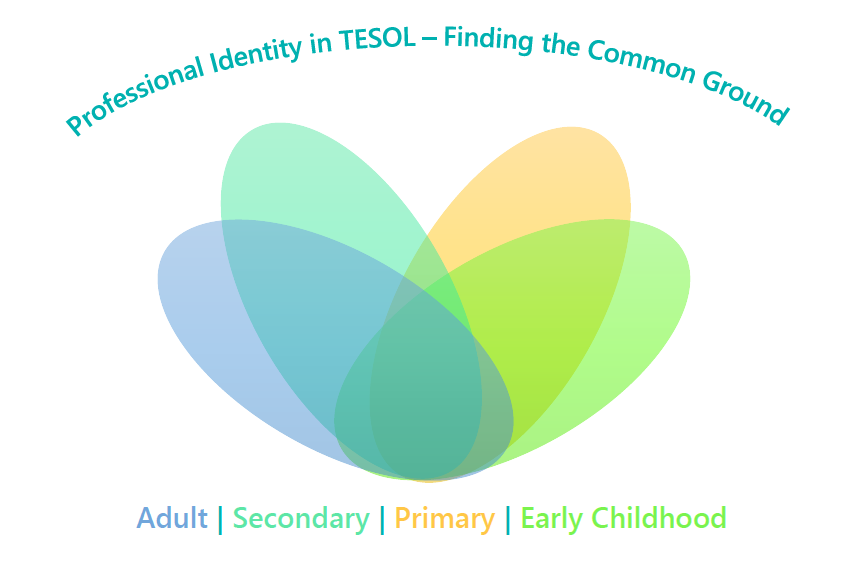
Panel of Experts: Finding the Common Ground
In this session, Assoc. Prof. Russell Cross will use the pre-recorded keynote from Prof. Ben Rampton, Dr Mel Cooke as a starting point to guide our panellists through a discussion on finding the common ground between different sectors.
It will be followed up by a response from Prof. Ben Rampton and Dr Mel Cooke who will act as discussants on this panel.
Assoc. Prof. Russell Cross (Chair)
(Melbourne Graduate School of Education)
Russell Cross is Associate Dean for Research at the Melbourne Graduate School of Education, where he
previously co-led the MGSE Academic Group for Languages and Literacies Education. His research focuses on
the sociocultural and political nature of teachers’ work from a Vygotskian perspective, particularly as it relates to
teachers’ professional knowledge and learning in content and language integrated learning (CLIL). With Kim
Bower, Do Coyle, and Gary Chambers, he recently released Content and Language Integrated Teaching: CLIL in
Practice through Cambridge University Press, and his work has appeared in Modern Language Journal, J
Teacher Education, and Language Teaching Research, among others. Russell is former co-editor of TESOL in
Context and a member of their current Editorial Board.
Rebecca Paic (Panelist)
(Melbourne Archdiocese Catholic Schools)
Rebecca Paic is a Learning Consultant for New Arrivals and Refugees for the Western region of Melbourne Archdiocese Catholic Schools. Her role includes building the capability of principal and school leaders in Catholic primary and secondary schools to support new arrival and refugee students within the context of multi-tiered systems of support. Rebecca also assists in the coordination of sector initiatives for schools with new arrival, refugee and EAL students in the areas of language development and awareness, settlement support, cultural diversity, trauma-informed practice, EAL curriculum implementation and EAL pedagogical practice.
Angela DiSciascio (Panelist)
(Gordon Institute of TAFE)
Angela Di Sciascio has worked in the adult EAL sector for over twenty years and is currently teaching at Gordon TAFE in Geelong. She is Chair of the Victorian EAL Framework Adult Sector Advisory Group and Vice President of VicTESOL.
Angela DiSciascio (Panelist)
(Collingwood English Language School)
Mairead HANNAN is Assistant Principal at Collingwood English Language School, leading Student Engagement and Wellbeing in a P-12 school for newly arrived students across the northern suburbs of Melbourne. Previously, she has worked in mainstream and alternative schools and in the arts and community sectors.
As past President of VicTESOL and leader within the Victorian schools system, she is committed to ensuring students’ identity, agency and linguistic resources are maximised and views these as foundational to positive learning and wellbeing for students. Her research into policy impacting on bilingual learners has enabled her to advocate for equity and quality education for bilingual learners at the state and national level.
Peter James (Panelist)
(Richmond West Primary School)
I have spent 40 years in public education, 12 of those in leadership roles in schools in a variety of settings – primary, secondary and P -12 schools from country Victoria to inner-city Melbourne.
Much of my time as a teacher has been spent working with VCE English students and as learning area leader and VCE assessor.
Richmond West offers students a bilingual Mandarin program, a Vietnamese immersion program and an English-based program with an emphasis on EAL.
Session 2: Unpacking of Keynote and Panel Facilitators
Randomised rooms to enable cross sector discussions facilitated by VicTESOL Committee members
Parallel Session 3: Sessions and Speakers
Dr Yvette Slaughter (Melbourne Graduate School of Education), Dr Gary Bonar (Monash University), Dr Anne Keary (Monash University)
Reframing Early Childhood educator professional learning needs in culturally and linguistically diverse early childhood contexts
Australia’s culturally and linguistically diverse profile is clearly represented in early childhood (EC) demographics, where 323 different languages are spoken by preschool children (AEDC, 2019). Policy, curriculum and academic discourses have shifted orientation in recent years, recognising the need to move from a monolingual perspective on language and diversity, to a multilingual stance. However, only a small range of research is available on EC educators’ stance towards practices which position children’s cultural and linguistic diversity as a resource for learning and how this is enacted. This presentation presents research findings on the professional knowledge base and professional learning needs of EC educators working in culturally and linguistically diverse contexts in Victoria. Using a mixed methodology approach, Q methodology, this research identifies EC educators’ beliefs in relation to engagement with the breadth of children’s linguistic repertoires; how these beliefs manifest as practice or the impediments to enacting these beliefs, and what further professional learning could support EC educators in developing and employing appropriate approaches in EC settings. Working in collaboration with fka Children’s Services, this research seeks to deepen pathways for knowledge generation and the relevancy, purposefulness and transferability of findings into ongoing, broader support for professional development.
Biographies
Dr Yvette Slaughter
Dr Yvette Slaughter, Languages and Literacy Education at the Melbourne Graduate School of Education, focuses on advancing theoretical and pedagogical innovations for languages education, encompassing the learning of second or additional languages, and in particular, the integration of heteroglossic perspectives into education.
Dr Gary Bonar
Dr Anne Keary
Skye Playsted (University of Queensland)
Creativity and collaboration: Teachers’ approaches to integrating oral skills in beginner-level adult EAL classrooms
In times when a focus on improvement, outcomes, assessment and standardised approaches to education is prioritised, such constraining conditions seem to shape the common ground of teachers’ practises across educational sectors, including the Australian adult EAL sector. Nevertheless, teachers find ways to foreground instructional approaches that assist adult migrant students to settle into new communities and support them to achieve goals of confident oral communication in English. What is the nature of oral skills teaching practices in Australian migrant language programs? Limited research and few professional learning resources are available to educators in this area. My PhD project is a small-scale study exploring collaborative research opportunities with adult EAL educators to deepen understandings of professional learning about teaching pronunciation. The aim of the study is to develop a sustainable, inclusive model of professional learning for teachers of beginner-level, adult EAL learners in the Australian context. The session is in two parts: first, I’ll outline the project’s background, theoretical underpinnings, and research methodology. Then, I’ll invite you to share in a mini-session based on the design of the project’s practitioner research methodology to unpack puzzles, concerns and approaches to teaching adult EAL oral skills.
Biography
Skye Playsted is an educator with over 20 years of teaching experience who has taught in primary and high schools, in academic English programs and in a regional adult migrant English program. Skye teaches in the School of Education at the University of Queensland, Australia. Her doctoral research is exploring pronunciation teaching and professional learning for teachers of adult, beginner-level EAL students. Skye is interested in classroom-based research, practice theories and qualitative methodologies in educational research.
Allison Green and Matt Roger (Foundation House)
Impacts of Traumatic Refugee Experiences on Learning and Behaviour
The Foundation House workshop, Impacts of Traumatic Refugee Experiences on Learning and Behaviour aims to build participants’ knowledge and understanding of how education might be impacted by refugee experiences and how to support students and families by developing our trauma informed lens.
Participants will:
- Reflect on their own work with students of refugee backgrounds through a focus on the impacts of the refugee experience upon students’ engagement, learning and wellbeing
Explore causes and manifestations of students’ trauma reactions related to their refugee experience and develop strategies for responding
Use case studies to illustrate trauma reactions and collaborate with colleagues around responding in the school context
Understand their appropriate role in relation to student disclosures of traumatic refugee experiences and making referrals
Biographies
Allison Green
Allison Greene is the Senior Professional Learning Officer for the Education and Early Years team at Foundation house. She has a background in school leadership in culturally and linguistically diverse communities.
Matt Roger
Matt Rodger is the Senior Schools Support Officer (RESP for the Education and Early Years team at Foundation House. He has a background as an EAL teacher and Youth program coordinator.
Michelle Andrews (Preston North East Primary school), Hien Webb (Collingwood English Language School), and Assoc. Prof. Marianne Turner (Monash University)
Learning Through Languages: Plurilingual Pedagogy in the English Classroom
The use of home languages to help EAL students learn is well-established to be beneficial. This aligns with the focus on plurilingualism strategies in the new EAL curriculum.
The Learning Through Languages project, conducted by Monash University researchers in 2021/22, developed resources and a professional learning program to create capacity for teachers to implement the plurilingual strand of the Curriculum drawing on a functional language approach that is already embedded in curriculum and pedagogy documents and leading to the generation of bi/multilingual multimodal texts.
In this session, project Lead Investigator Marianne Turner is joined by teacher participants Hien Webb and Michelle Andrews to explore plurilingualism and showcase the project and the resulting resources.
Biographies
Michelle Andrews
Michelle Andrews is a Primary TESOL specialist with over 30 years teaching experience, including 18 years’ as an EAL teacher. She taught for more than 12 years in the New Arrivals Program at Blackburn English Language School, and now coordinates the EAL program at Preston North East Primary School. She enjoys developing and implementing practical strategies to build teacher capacity and support positive educational outcomes for EAL students.
Marianne Turner
Marianne Turner is an Associate Professor in TESOL and Bilingual Education at Monash University, Australia. She has published widely on the leveraging of students’ linguistic and cultural resources for learning, as well as context-sensitive approaches to the integration of language and content in English as an additional language (EAL), foreign and heritage language contexts.
Hien Webb
Hien Webb began her teaching career as a language, science and maths teacher at secondary school levels. She has over 25 years of experience working for Cultural and Linguistically Diverse (CALD) communities in a range of sectors including community development, counselling and adult education. She is currently an EAL specialist for the New Arrival Program (NAP) at Collingwood English Language School. She is passionate about developing culturally inclusive curriculum and strategies that develop positive cross-cultural relationships amongst diverse learners.
Session 4: Panel of Experts: The ACTA EAL/D Roadmap (Speakers)
Session Overview
ACTA has launched its National Roadmap for English as an Additional Language or Dialect (EAL/D) Education in Schools, calling for national ‘build back better’ reform of specialist provision for English language learners in schools ahead of the Federal Election.
The plan addresses longstanding and now pressing national policy issues that have affected the quality of English language provision for over 600,000 English language learners in Australian schools through twelve key actions aligned to the directions and initiatives of the National Schools Reform Agreement.
Read ACTA’s National Roadmap for English as an Additional Language or Dialect (EAL/D) Education in Schools
Read ACTA’s media release
This session will provide a quick recap of the roadmap, before moving towards discussions of how the implementation of the Roadmap will help teachers on the ground, and strategies to assist individuals spread the important messages of the Roadmap.
Dr Anne Keary (Facilitator)
(Australian Council of TESOL Associations)
Anne Keary is President of the Australian Council of TESOL Associations (ACTA) and convenor of the ACTA Early Childhood Education consultancy group. She is a lecturer with the Faculty of Education, Monash University.
Dr Michael Michell (Panelist)
(University of New South Wales)
Michael Michell is an honorary lecturer at the UNSW School of Education and previously language and literacy lecturer from 2008 until 2016. Before then, he worked as an ESL teacher and policy officer in the NSW Department of Education leading EAL policy, assessment, curriculum and research projects. He was a member of the national writing team for the ESL Scales and later the Victorian Tools to Enhance Assessment literacy for Teachers of English as an additional Language. (TEAL) online assessment project, and the Victorian Curriculum and Assessment Authority F-10 EAL Curriculum. Michael was ACTA president from 2015-2020.
Mark Melican (Panelist)
(Blackburn English Language School)
Mark Melican is the principal of Blackburn English Language School, a three campus P-10 school in the NEVR (North Eastern Victoria Region). Mark has worked in the New Arrivals Program for the past 35 years having started as a teacher at Tottenham ELC in 1987. He has worked at primary and secondary centres annexed to mainstream schools and at Blackburn ELS since 2010. Mark is strongly committed to the EAL professionalism, being a long-term member of VicTESOL. He has ardently advocated for the rights of newly arrived EAL learners to be able to access intensive programs and for the continuing need to ensure ongoing provision of quality EAL programs to students in mainstream schools.
Assoc. Prof. Rod Neilsen (Panelist)
(Deakin University)
Rod Neilsen is an Associate Professor in TESOL/languages education at Deakin University, Melbourne. His research brings critical perspectives to TESOL education and focuses on the development of language and intercultural awareness in education professionals. Recent projects have examined how teacher mobility and transcultural exchange programs enhance teacher professional learning, and he is currently researching plurilingual affordances in higher education. His co-authored book, Navigating TESOL, will be published by Routledge in 2023.